
When you manage a commercial property with an aging parking lot, it’s rarely as simple as identifying one pothole and scheduling a repair. Cracking may stretch across multiple sections. Drainage problems may be developing near a catch basin. Loading areas may be showing significant wear while less-traveled sections are simply beginning to look tired.
Ideally, you’d address everything at once. Realistically, the maintenance budget may say otherwise.
For property managers throughout the Tri-State area of NY, NJ, and PA, early September is a particularly useful time to assess those competing needs. Summer has given you a good opportunity to see how the lot performs under regular use, while colder weather is still ahead. The goal isn’t necessarily to fix everything before winter. It’s to determine where your available budget can make the biggest difference.
Start With Safety, Not Appearance
When several areas need work, safety provides a logical starting point.
A faded parking lot may not look its best, but a significant pothole in a main drive aisle presents a more immediate concern. The same applies to broken pavement along pedestrian routes, uneven transitions, damaged concrete, or other conditions that make it harder for people and vehicles to move safely through the property.
Look at the site from the perspective of the people using it every day. Where are customers walking? Where are trucks entering? Which drive lanes receive the most traffic?
This can help separate improvements that would be beneficial from conditions that deserve more immediate attention.
Find the Problems That Can Create More Problems
Next, look beyond the size of the damaged area and consider what’s causing it.
A relatively small drainage problem, for example, can affect a much larger section of pavement if water continues getting beneath the surface. Likewise, repeatedly patching the same area may not be the best use of your budget if an underlying issue is causing the pavement to fail again.
Pay particular attention to:
- Standing water or areas that drain slowly
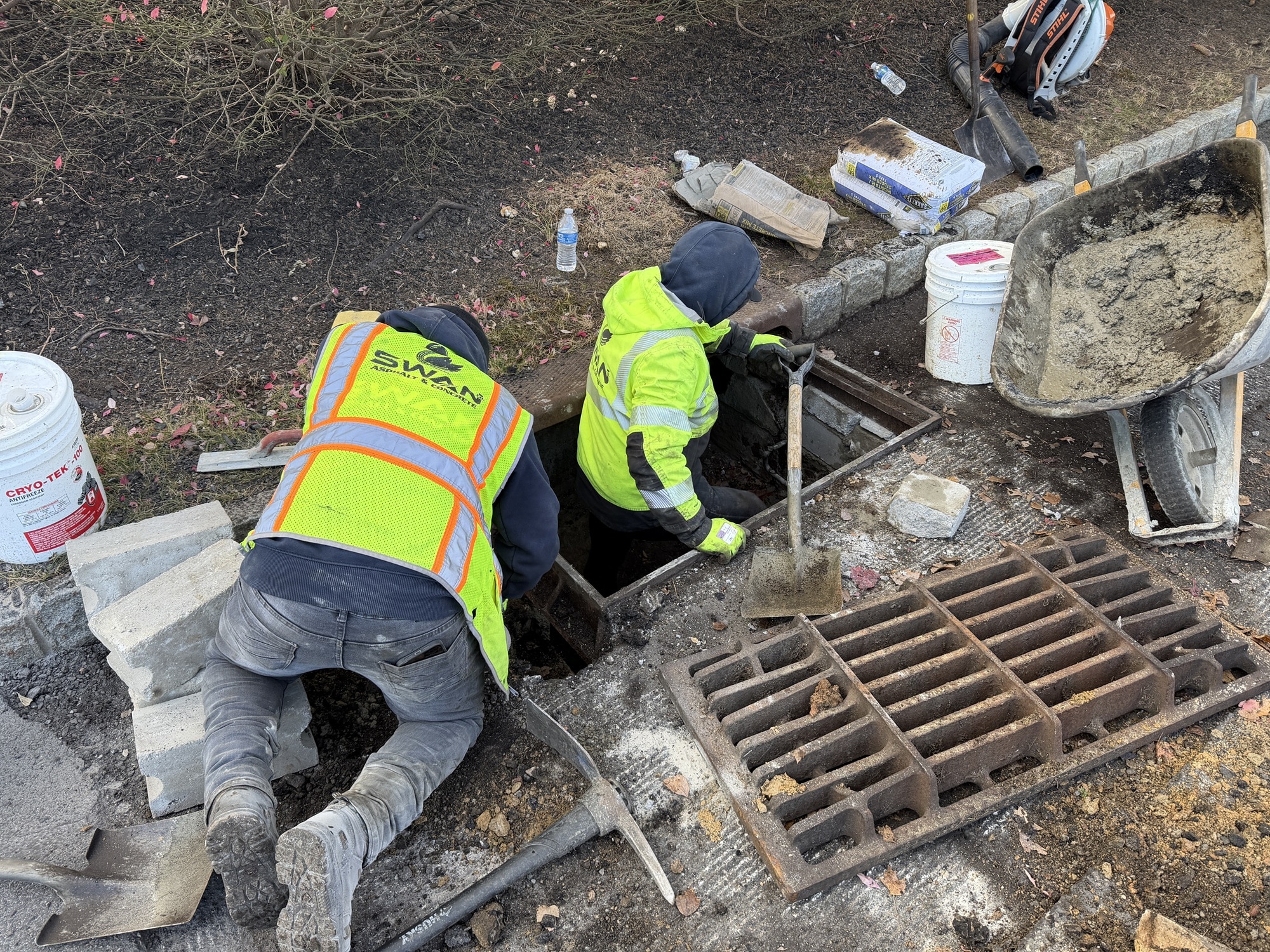
- Pavement sinking around catch basins
- Cracks that have noticeably expanded
- Potholes that repeatedly return
- Areas where the pavement is breaking apart rather than simply showing surface wear
For a commercial property in Flemington, NJ, these conditions become especially worth evaluating as fall approaches. Water entering damaged pavement now can become more troublesome once colder temperatures bring repeated freezing and thawing.
Consider How Important Each Area Is to Daily Operations
Two equally damaged sections of pavement don’t necessarily deserve equal priority.
Imagine one deteriorated area is located at the back of a lightly used parking section. Another is at the entrance where every customer, employee, delivery vehicle, and service truck passes.
Addressing the entrance first may provide significantly more value.
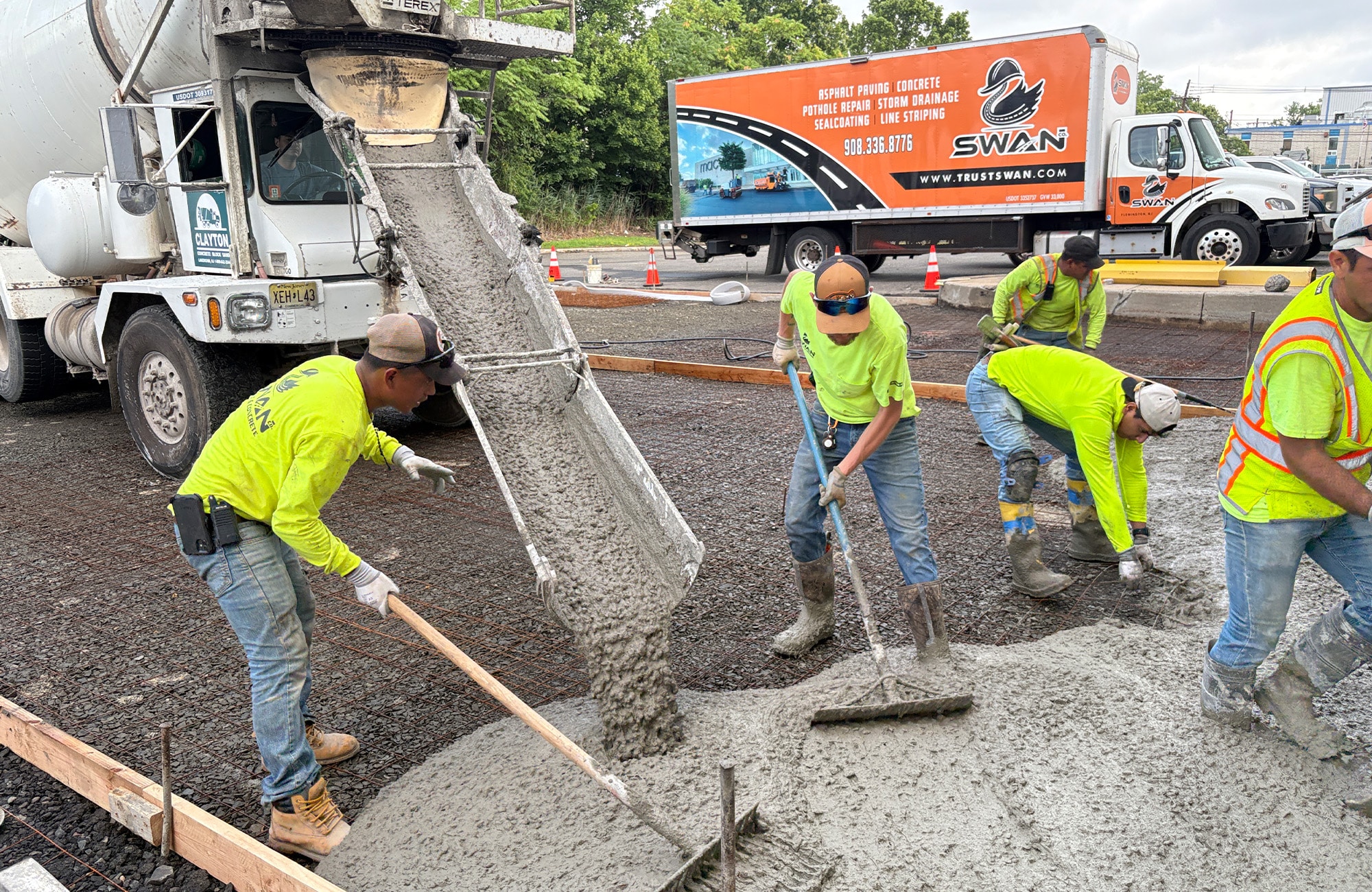
Loading docks, truck routes, entrances and exits, fire lanes, pedestrian crossings, and other heavily used areas generally deserve additional consideration. Repairs in these locations can improve safety while helping keep the property operating smoothly.
This is especially important for industrial and commercial properties across the NY, NJ, and PA Tri-State area, where pavement may need to support everything from passenger vehicles to frequent heavy truck traffic.
Think in Phases Instead of All or Nothing
A parking lot that needs substantial work doesn’t automatically require one enormous project.
A phased pavement maintenance plan can divide the property into manageable sections based on urgency, budget, and operational needs. For example, the first phase might address a drainage problem and badly deteriorated drive aisle. A later phase could handle less urgent cracking, surface maintenance, or another section of the property.
This approach can make a larger project easier to budget while ensuring the most important work isn’t delayed simply because the entire project can’t be funded at once.
Phasing can also reduce operational disruption. Rather than closing or restricting large portions of a busy property simultaneously, work can be coordinated around tenants, deliveries, customers, and other site requirements.
Know What You’re Preserving
Limited budgets make preservation especially important.
Some areas may not need major reconstruction yet. If the pavement is still structurally sound, preventive maintenance such as crack sealing or sealcoating may help protect it while more heavily damaged areas receive the larger share of the current budget.
Think of the property as several pavement conditions rather than one parking lot.
One section may need substantial repair. Another may need preventive maintenance. A third may simply need to be documented and monitored.
That distinction can prevent limited funds from being spread evenly across the property when certain areas need them much more than others.
Use September to Look Ahead, Not Just at Today
Early fall offers property managers an important planning window.
Walk the property and document what’s changed over the summer. Review areas where water collects. Look at repairs completed earlier in the year and see how they’re performing. Consider which areas you’d least want deteriorating further through winter.
You can then begin separating your needs into three simple categories: address now, plan next, and monitor.
That doesn’t require predicting exactly what the pavement will do. It simply gives you a clearer framework for deciding where today’s budget should go and what needs to be considered in the next budget cycle.
A Limited Budget Can Still Support a Smart Pavement Plan
Having more pavement work than available budget doesn’t mean you have to settle for a temporary patchwork of unrelated repairs.
A thoughtful site evaluation can help identify where safety, drainage, traffic, preservation, and future deterioration overlap. From there, the work can be prioritized and phased around the property’s actual needs.
For commercial property managers in Flemington, NJ and throughout the Tri-State area, Swan Co. can help turn a long list of pavement concerns into a practical scope of work, whether that means addressing an immediate problem this fall or building a phased plan for what comes next.
Make Your Pavement Budget Work Where It Matters Most
You may not be able to address every section of your property at once, but you can make informed decisions about what comes first. Swan Co. can help you identify priorities and build a practical plan around your property, operations, and budget.
Call (908) 336-8776 or visit trustswan.com to discuss your property with Swan Co.