The Problem That Starts Below the Surface
When pavement begins to fail, most people look at what’s visible — cracks, potholes, or worn areas. But in many cases, the real issue starts below the surface.
Water.
Drainage problems are one of the most common and most damaging factors affecting commercial pavement. And because they often develop gradually, they’re easy to overlook until more serious issues begin to appear.
Understanding how drainage impacts your property can help you stay ahead of costly repairs and maintain a safer, more reliable surface.
How Water Impacts Pavement Over Time
Pavement is designed to handle traffic and weather, but it relies on one key assumption: water will drain away properly.
When it doesn’t, moisture begins to work its way into the surface and the layers beneath it. Over time, this can:
- Weaken the base supporting the asphalt
- Expand cracks through freeze-thaw cycles
- Reduce the overall strength of the pavement structure
Even small amounts of standing water can accelerate this process, especially in high-traffic areas.
Common Signs of Drainage Problems
Drainage issues don’t always appear dramatically. In many cases, the early signs are subtle.
You may notice:
- Water pooling after rain or snowmelt
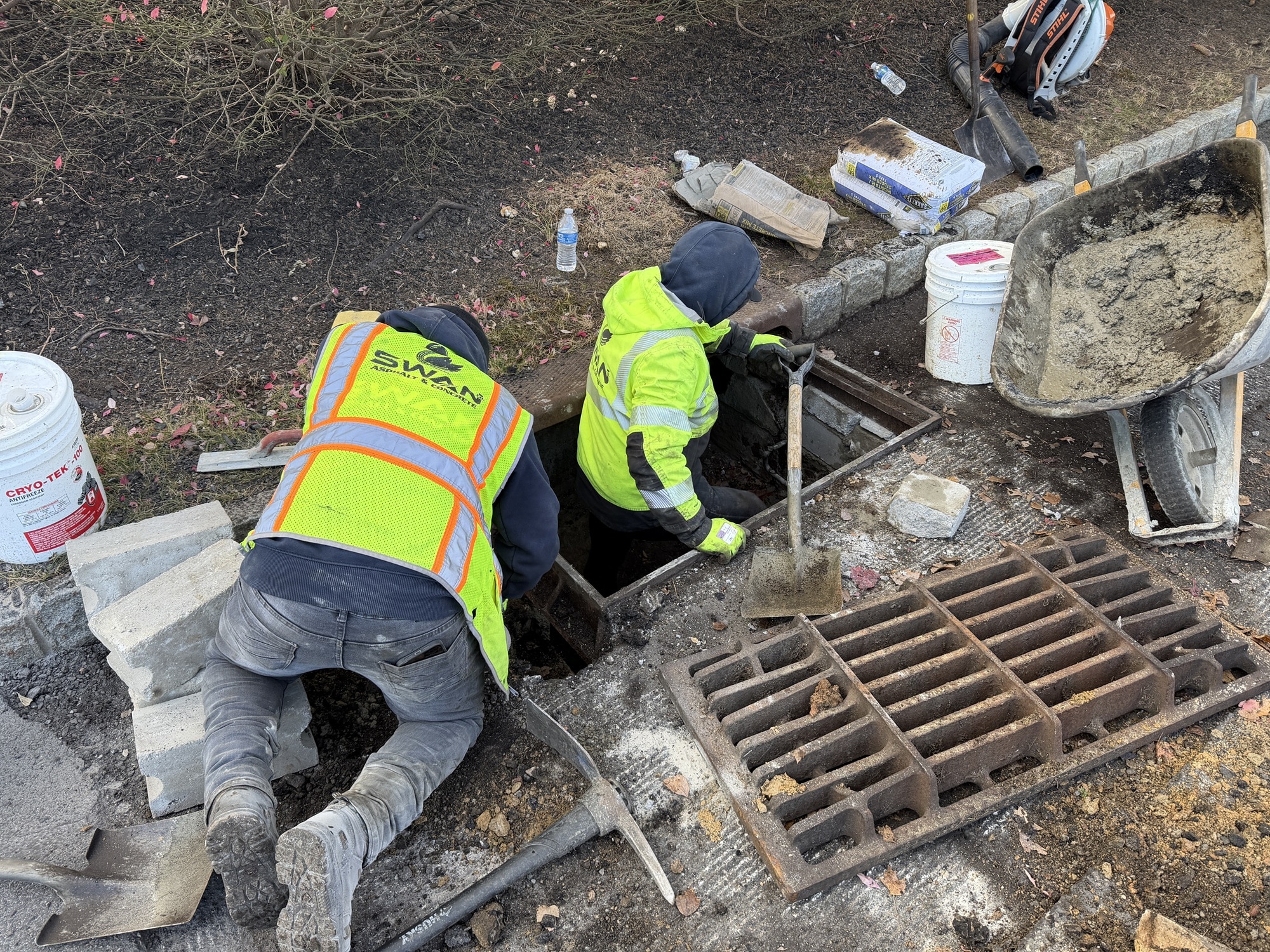
- Catch basins draining slowly
- Cracks forming near low areas
- Pavement that feels soft or uneven under load
These indicators often point to underlying conditions that deserve closer attention.
Where Drainage Issues Typically Begin
Drainage problems can develop from several sources, often working together.
Some of the most common include:
- Improper grading that prevents water from flowing correctly
- Clogged or aging catch basins
- Settlement around drainage structures
- Surface wear that allows water to penetrate more easily
Because these issues are connected, addressing only the surface symptoms may not fully resolve the problem.
Why These Problems Often Go Unnoticed
Unlike visible damage, drainage issues tend to develop gradually and below the surface.
Water doesn’t cause immediate failure — it slowly weakens the pavement system over time. By the time signs become obvious, the underlying structure may already be compromised.
This is why routine evaluation and early attention are so important, especially in areas where water tends to collect or flow.
What Happens If Drainage Issues Are Left Unchecked
When water continues to infiltrate and weaken the pavement structure, small problems can turn into larger ones.
Over time, this can lead to:
- Accelerated cracking and surface breakdown
- Repeated pothole formation
- Structural instability in localized areas
- Safety concerns for both vehicles and pedestrians
In more advanced cases, subsurface erosion can create voids beneath the pavement, increasing the risk of more significant failures.
A More Complete Approach to Pavement Maintenance
Addressing drainage isn’t just about fixing what’s visible — it’s about understanding how water moves across and beneath your property.
Swan Co. works with commercial property managers to evaluate pavement conditions as a complete system, identifying where water may be contributing to wear and helping plan solutions that support long-term performance.
As an OSHA-compliant and NAPA-certified contractor, the focus is always on safe, practical, and lasting results.
Stay Ahead of Drainage-Related Pavement Damage
Drainage issues don’t always show themselves right away, but they can have a lasting impact on your pavement’s performance. Taking a proactive approach now can help prevent more serious problems down the road.
If you’ve noticed standing water, slow drainage, or recurring problem areas, it may be time to take a closer look.
Call (908) 336-8776 or visit trustswan.com to connect with Swan Co.